“Your debutante just knows what you need, but I know what you want.”
This lyric from Blonde on Blonde has been bouncing around my head over the last week. No, minha esposa and I are not going through a crisis, nor am I feeling existential in my musings, but rather I’ve been thinking about the expressive nature of language.
Whether because of the actual word you choose, or the emphasis on a particular word, or context, you can elicit different feelings that are not easily translatable, unless you are a native speaker or you have a high degree of fluency. Perhaps the word connotation encompasses this, but it doesn’t feel like it does.
I got around to thinking about this because I had forgotten what the word for ‘need’ was, as I don’t often use ‘need’ in my Portuguese vocabulary. This may be a bit weird considering I’m six months into my journey, but I regularly forget what simple words like ‘bad’ are – maybe I’m just an optimistic person?
Eu quero…. (I want…)
Eu preciso….(I need…)
One can make the argument that you don’t need superfluous language in life. If you show up to an emergency room with blood gushing from a wound, hopefully, no one will question the philosophical reason for you shouting, “I need a doctor!”

If you’ve never seen this show, watch it today
I would, however, as I’m sure most, make the argument that these descriptors, whether overt or implied in language, are a foundational part of Maslow’s Hierarchy, not merely a high note of self-actualization. Why else have we had poetry, musings, and fictional storytelling for millennia, and more often than not, the most profound pieces are not from the upper echelon of society, but rather the opposite – from people who have struggled, suggesting this is a central part of what it means to be human.
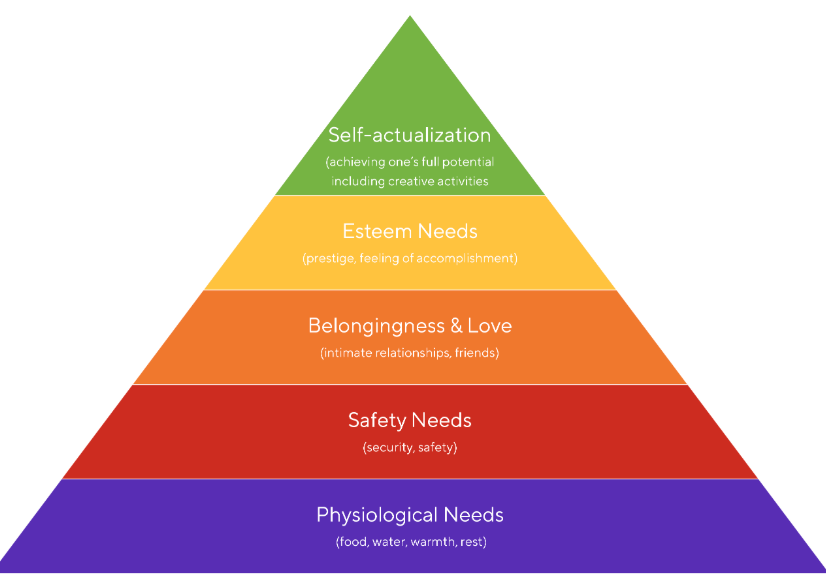
In case you needed a reminder of a 101 course
This creativity has certainly been a central element of my father-in-law’s life, as he is a prolific writer of history and poetry, and has published approximately 40 books, of which I can understand none.
I’ve often wondered if certain languages have a predisposition to creativity because of their inherent structure. If you’ve read my last piece – is this why English music is so prevalent in the world? I sincerely doubt it, but there are certainly key differences in languages that help or hinder expression.
During the effort of futility that was my four years of studying Mandarin, I remember learning about the “Lion-eating Poet in the Stone Den”, where, as a linguistic exercise, the author wrote an entire poem whose words used different tonal inflections of “shi”. If you want to listen to it in Mandarin Chinese, here it is, though it is said to be incomprehensible even for native Mandarin speakers.
Several friends, as well as multiple Instagram posts, have also light-heartedly commented on the long-winded nature of Brazilian Portuguese, and their never-ending quest to shorten sentences. For example, if you were to ask “Voce tem as chaves?” (“Do you have the keys?”) The answer you will likely reply with is a simple “Tenho.” (“Have.”) This being said, there is always an anecdotal contradiction. While attempting to order a beer the other night, I gave my best “Oi. Eu quero uma cerveja Pilsen, grande, por favor.”
The man responded in a typical Brazilian way, saying: “A gente tem, mas acabou.” (“We have it, but it’s gone.”)
This left me slackjawed and perplexed, as I was expecting a simple “Nao tem.”
Jokes aside, there are some incredibly beautiful words in Portuguese, such as ‘saudade.’ ‘Saudade‘ is the feeling of longing when you’re not with someone. The concept isn’t foreign to English speakers, but there is no direct, literal translation.
Similarly, in German there are words like ‘Schadenfruede’, meaning the joy derived from seeing others misfortune, or ‘Backpfeifengesicht,’ which translates into “A face that begs to be slapped.” Now, I’ve been told I have a punchable face in the past, but this sounds so much better.
And then, we have the sheer laziness of the Dutch, whose language sounds like they pretend to know how to speak either English or German. Case in point, Goede Slaap = Good Sleep.
Going back to reality, while I struggle to effectively order a beer in certain scenarios, an aspect of my language journey that I’m excited about is that I’m able to express jokes and certain humor, which is a key part of my life.
For instance, Marilia and I were leaving the house the other night to meet some friends. As I was leaving I said to Marilia’s parents, while our dog was in the room:
“Agora, ele vai dizer que ele nao comeu, mas ele comeu as seis horas!” (Now, Zuni is going to say he hasn’t eaten, but he ate at 6!)
This elicited a small laugh from the in-laws, which brightened my day.
****
Coming back to Brasil, I was a bit nervous as I really hadn’t practiced my Portuguese throughout our travels in Europe. The month so far has been great though, and I can physically feel my brain making progress through my synapses as my Portuguese gets ever-so-slightly better, or what the Dutch call Goedenbrainen. I have experienced this before, primarily in learning to play the piano. When I first started to become slightly ambidextrous, playing alternating bass notes with my left hand and running scales with my right, I would feel a tingle down the middle of my brain.
I feel as though I’m adapting well and making good progress, primarily in my reading, writing, and spoken production. Listening is still a significant challenge, and I expect it will be for quite some time.
I have been seeing a tutor once a week, which has been good in providing a bit more structure to my daily regimen, and I feel I’m on pace to hitting my goals by the end of the year. I have also realized that I do not need to optimize every day, and that it’s okay to take a break – for instance, this week I haven’t done a lot of studying.
An area that I am making a concentrated effort to improve is grammar and conjugations, as I feel it will be a bottleneck sooner then later. Journaling will be a critical part of this, and in July I will be making a concentrated effort on daily journal entries. I think it will be easier keep with this in July, as my wife and I will be in Peru for the month, and I will not have my laptop – just my A2 study guide, notebook, and phone.
One tool that I have begun using in journaling is ChatGPT. While I have my tutor, my wife, her family, books, podcasts, etc., I have to rely on other people for input. The other day, I tried an experiment where I uploaded my English and my Portuguese journal entry to ChatGPT and had it compare what was being said, as well as provide recommended changes. It was frankly quite amazing to see that it was able to analyze what I did wrong, not only from a grammar and conjugation standpoint, but also highlighted literal translations that, while they were okay, weren’t how people talk to each other.
Now, before any linguists lose their mind, I’m not saying this is 100% accurate nor am I saying you can teach yourself a language simply by using an LLM. It seems to be a great supplemental tool however, in helping people with their language journey. I’m not claiming it’s 100% accurate, but out of several samples, it had greater than 95% accuracy. I’m not saying that’s a great sample size (in fact, any statistician would say it’s not), but it would be improbable for those three samples to be scored so similarly, and other uploads to be wildly inaccurate.
Many linguists on Reddit (when will I learn to not engage on Reddit), took issue with this, either citing that people won’t learn the skills themselves, that it possibility couldn’t correct grammar, or scoffing at the idea of incorporating AI into their teaching methodology – those people will find themselves out of a job sooner rather than later.
It’s all in how you use a tool. There was a recent study done by MIT, highlighting the decrease in brain activity in students who leveraged LLMs to write papers for them, versus assisted, versus people who didn’t use LLMs at all. It was no surprise that the people who didn’t use LLMs had the highest brain activity, but it was frightening at how little brain activity the people who fully relied on LLMs in writing their paper had.
More subjective and biased than the MIT study, there have been many opinions voiced by writers and professors about the soulless dribble that comes out of ChatGPT, and it terrifies me for the next generation of creatives. I’m a believer that creativity is a muscle. Sure, some people are naturally prone to it, but you don’t become Bob Dylan overnight, and 80% of his catalog will show you how bad of a writer he is most of the time.
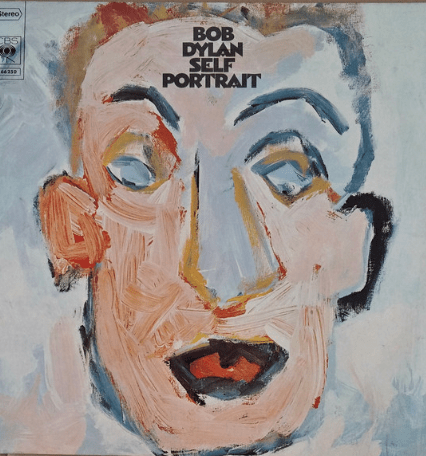
Case in point
****
Learning Portuguese is my biggest daily frustration, but I have been doing a better job at enjoying the ride and acknowledging the small wins.
My language journey will likely never stop, as there will always be something new to learn and unpack. I may be biased, but I’ve written some impactful and beautiful prose in English, and I want to elicit that same feeling someday in something that I write in Portuguese. I’ll continue keeping my head down, studying, and leveraging all the tools at my disposal to work my way through A2 by September (at least for everything except listening), and focus on B1 thereafter.
Right now, I am content with delivering jokes about Zuni tricking people into giving him a second dinner, but one day, I hope to be able to read my father-in-law’s books and poetry and experience the nuances of what he intended in his writing.
 topagraphy
Leave a comment