It’s near sunrise on June 21st, 1532 A.D., in an area known as Ollantaytambo, a large valley in Peru. The sounds of stones being chipped, dragged, polished, and set in place can be heard. Thousands of people are toiling, set in their work – their annual tribute, to create a new structure overlooking the valley – yet another Temple of the Sun.
A man – the architect – reaches the summit of a nearby peak overlooking the temple and valley. He’s here to watch the sunrise and adjust any calculations of his structure he may need, to ensure that the sunrise of the summer solstice beams directly through key features of this temple – it must – as the only reason to build this is to please god.
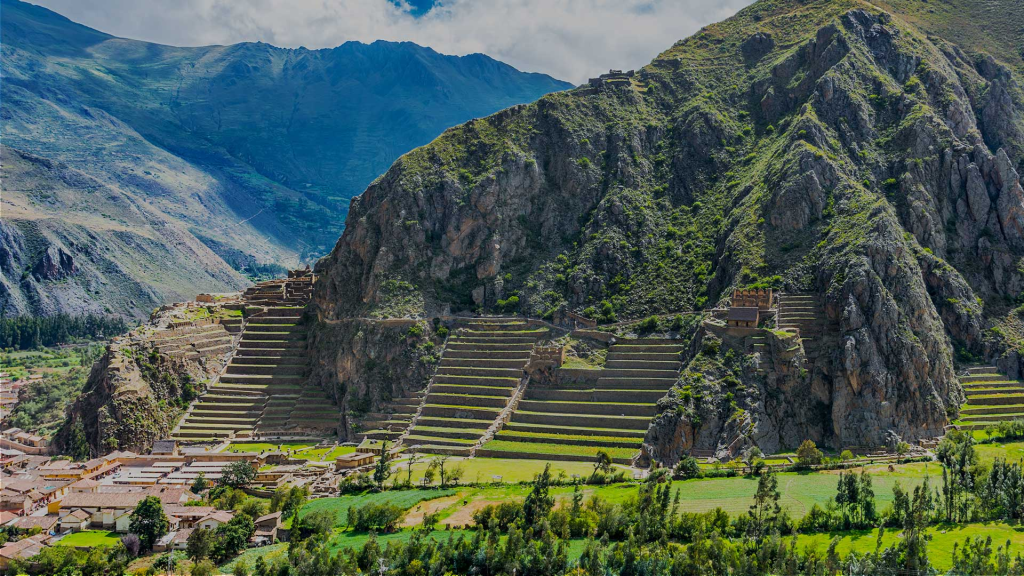
Courtesy of Peru.Travel
While organized and effective, this temple will never be finished. In just a few short months, the Incas will be dealt their first crushing loss against the Spaniards at the Battle of Cajamarca. This will set into motion decades of fighting, culminating with the eventual collapse of the Incan empire, one of the most architecturally advanced societies the world has seen.
Did this thrust Peru into the resulting chaos of the next several hundred years, or was Peru doomed from the start?
*****
I never had my heart set on Peru. In much of the traveling world – or maybe simply in my experiences – it was glossed over. Especially in the world of travel influencers, who seemingly spend 75% of their time on Southeast Asia, and the rest following predictable trends of Madeira, Medellin, etc. Did you guys know that Kyrgyzstan is a country?! These 23 travelers were apparently the first to find it! It really makes me think that my wife and I could’ve been successful this year if we did an Instagram page focused on the realities of marriage when traveling.
It wasn’t until long talks with a friend who had spent ample time in Peru that I became interested in the country.
Sure, obviously, I knew of Machu Picchu and had heard of many people who “survived the Inca trail” – I’m not here to knock it, but it’s not really my thing – but outside of that, I was left scratching my head.
After researching the country, one area of particular interest in visiting was Huaraz, a hub for hiking, cycling, and climbing in the Five Valleys of Peru.
Out of our five weeks in Peru, my wife and I spent two weeks in the mountains of Huaraz, overlooking the small city.
*****
While cycling the mountains of Huaraz, I developed a good relationship with my guide, Julio, who has owned a bike shop and hostel for 20 years. Julio had spent a few years in San Francisco, and we had quickly developed a rapport through our taste in music.
We were talking about politics, corruption, and doing business in Peru.
“When people shove a suitcase of money in front of you, what are you to do? Come on, man.”
That was his favorite saying – “Come on, man.”
He was sharing that the only way things get done in Peru is to pay people off, and the consequences.
“You have these companies, man, and they tell you: ‘Here’s a little something for you. Don’t worry, don’t worry, no one will find out.’ But what happens man, in five years, everyone finds out,” he said while pantomiming washing his hands.
“I was walking the other day, and I saw this guy. He was old and decrepit. He said, ‘Julio, Julio man. It’s me. Don’t you remember, my friend?’”
He shook his head.
“This man, he used to be the mayor. He had spent 20 years – 20 YEARS – in prison, man. He looked like a different person. For what? He gets out of prison, and his wife and kids had moved to Spain. She’s with another man, and now he has $50,000 in his bank account. The man has nothing. Come on, man.”
This corruption permeates the highest levels of government and thereby all of society. In 2020, out of the 130 legislators in Peru, 68 of them were under investigation, many for corruption. If that weren’t shocking enough, in the last three decades, nearly every single Peruvian president has been accused of corruption. These accusations, and the ensuing imprisonment – at least Peru does a good job at punishing them – have led to a sort of V.I.P. political jail called Barbadillo. Barbadillo was constructed to house jailed Presidents – and it’s at capacity. In fact, during my second trip to Peru this year, in a 10-day timeframe, the former president from 2006 was sentenced to 25 years in prison, and the current president was impeached. Just another day in Peru.
“When your leaders steal, who’s to tell the people not to?”
While self-serving, corruption often has the unpleasant side effect of disadvantaging the greater population of society, whether by diverting funds, hindering economic growth, eroding trust, and increasing income inequality, etc.
How does this become rampant throughout a culture?
*****
To be clear, I’m not trying to pretend I have all of the answers; this is simply a cursory glance based on my brief experiences and conversations with a handful of locals. Two books that will provide great insight into these matters that I have not yet read are Open the Veins of Latin America and The Last Days of the Incas.
It’s fascinating and sad to see what has been lost in South America. It doesn’t matter what country you talk about; much of their resources were stolen. I don’t use the term stolen as a progessive or conscious term – it was the de facto way of the world for almost the entirety of history. Whether you’re referring to Romans extracting wealth from what is now Europe and North Africa, Ghengis Khan of Mongolia, Cyrus and the Persian Achaemenid Empire, it was a reality.
To quote a friend, it’s “just wild how much Spain owes South America.” And, what has Spain does with that wealth? Not much, in my opinion. It was squandered soon after it was brought across Atlantic, and, as of today, it’s mainly the envy of the world only for jamón ibérico, and relics of the past.
There was so much extracted from these lands that author Antonio de León Pinelo was quoted as having said that it was enough to pay for building a bridge from Bolivia to Madrid – and this was before his death in 1660.
It’s hard to imagine how this theft did not impact the economic mobility of the indigenous people for centuries, and how easily corruption could seep into the fabric of society once Spain had left with the majority of the continent’s capital.
When the Republic of Peru was finally founded in 1821, a similar story played out that we see time and again, after a colonial power exits. The ‘elites’ of Peru, as with many Latin & South American coutnries, were the Criollas, or Peruvians that were direct descendants of the Spanish, and held higher places in office and society.
Lima consolidated power, and there was a great disconnect between Lima versus the rural population. This was, in part because up until 1979, illiterate people in Peru, more than likely indigenous and from the rural areas, were unable to vote.
Many countries have been keen to put their fingers on the scale as well, with multinational companies, many in the mining industry, paying to get what they want. Why else would they be breaking ground on an airport and a Marriott a few hundred meters from a key site of the Sacred Valley?

You know what this backdrop needs? An airport and a Marriott.
*****
My wife and I were standing on top of the unfinished Temple of the Sun in Ollantaytambo. It wasn’t the summer solstice, a few weeks after in fact, but the structure was nonetheless impressive. I looked over the valley to my west as the sun began to sink between two peaks.
Even though there were two dozen people on top of the temple, I couldn’t hear them. The wind was flowing through the valley and rushing upwards over the temple, drowning out any noise from the other tourists.
A raptor flew overhead.
I’m dismayed by where this country is, and what it could be. It has such an incredible history, so much to offer, and a population that, while escaping from their situation is likely impossible, has a remarkable joy, albeit restrained.
One can hope that somehow, the majority of the population gets a fair shake at creating the life they want.
 topagraphy
Leave a comment